Thursday, 29 September 2016

The Jesus Trolley


Street preaching, an unenviable vocation amidst the secular urban space, bearing both glad tidings to the willing souls and noisome message to the stonehearted. The unordained and unaffiliated status of the preachers is often frowned upon by the denominations and orthodox. Their (sometimes) rowdy voices irritate both common atheists and street traders alike. Their uncompromising call for repentance is often ill received, and their gloomy prediction of death and hell attracts insults and abuses.

Yet some chose to tread along the undesirable path. One of whom is Desmond Hynes, the faithful yet somewhat eccentric man who spent three decades proselytizing at the thoroughfares of Melbourne city. He was a familiar fixture frequently seen in the immediate vicinity of Bourke Street Mall, the Melbourne Cricket Ground (MCG) and the Flemington Racecourse. Like a modern day Jeremiah, he sang praises to God and condemned sins at market places and vibrant street walks.


It was difficult not to notice Desmond Hynes and his evangelizing activities. His hand painted placards and signature Jesus trolleys joyously screamed for attention wherever they arrived with an occasional playful “Oh Yeah” inserted alongside the heartwarming and solemn slogans. Utilizing materials gathered from op shops and unwanted objects, the freelance street preacher prolifically created numerous visually stimulating, albeit unrefined, typographic artworks.

Bold, rudimentary uppercase letterings in huge-sized san-serif font were drawn unrestrictedly with enamel and acrylic paint on cardboard, fabric, plastic, canvas and T-shirts. The words conveyed were urgent and imperative. Exclamation mark and single underline were liberally used throughout the brightly coloured final products for emphasis purposes. Desmond Hynes travelled around with his famous shopping trolleys and visibly signs, giving out both impromptu and planned sermons for passersby within earshot.

Describing himself as a former gambler and fornicator, Desmond Hynes is eager to publicly testify to his life changing experience and fulfill a vow well kept since the episode of bowel cancer scare in year 1986. It was a wonderful sight of a passionate sinner turned believer insanely yet zealously professing his love for the Saviour openly with no fear of ridicule. The acts were amateurish and slightly rough-edged, but sincere and utterly moving.


Exhibition:

The Jesus Trolley: 30 years of Desmond Hynes pushing art and Jesus on the streets of Melbourne

Date:

8 September to 24 December 2016

Venue:

City Galley, Melbourne Town Hall

Sunday, 18 September 2016

Outre Gallery - home for the underground art


Elizabeth Street is a noisy trading hub for the avid motorcyclists, a gadget Mecca for the photography aficionados, and a concentrated venue of robust Asian eateries. Yet amidst the blaring retail stereo and ostentatious electronic devices, sits an oasis of non-conventional arts and an exhibition platform for all things lowbrow and underground. Outre Gallery is the custodian of the eccentric and iconic. It is a podium for the alternative movement and a rigorous advocate of pop surrealism.

Outre Gallery houses a collection of smashing artworks embedded with hidden codes and messages. Some audaciously poke fun at the mainstream cultures and social conventions; some gleefully display their dark humour and sarcasm camouflaged beneath the gorgeous and innocent façade.


The discerning eyes will immediately recognize the inimitable mid-century art style of the prolific Shag. Utilizing highly intensified saturated colours, Shag’s artworks are a manifestation of swankiness belonging to the high-end society: distortedly skinny men in their tight-fitting tuxedo dinner suits, women of curvy shape draped in leopard spot dresses, stylish bouffant hairstyles, sleuth-looking black kittens, sexy stiletto heels and classy martini glasses. The paintings are a series of unashamed and unapologetic scenes of bitchiness, jealousies and scandals.


Next in the unmissable list is Mark Ryden’s twisted fantasy involving incredibly romantic wide-eyed girls, fairytale-like creatures, elaborate Elizabethan era costumes, nostalgic old toys, skeletons, and eerie-looking monsters. The paintings flirt with one’s innocence, spiritual beliefs and inner dark thoughts. Think stunning young girl with ash blond hair wearing outrageous outfit made of bloody red meats, strolling gracefully in surrealistically beautiful garden. Each composition is stunningly pretty and outright ridiculous, quietly yet sinisterly sneers at our assumed simplicity.

Other noteworthy artworks include the dreamlike Utopian community of miniature beings by the husband and wife duo APAK, Horitomo’s tattooed cats, Matte Stephens’s modern cities in flat perspective, playful retro illustrations by Derek Yaniger, and the deafening mysterious worlds created by Andy Kehoe.

Location:

249 Elizabeth St, Melbourne

Website:


Friday, 2 September 2016

ACDC Lane - in a sea of regal purple


Year 2016 is a curious and downhearted year to the universe of Rock and Roll. In April, the world grieved the departure of its music legend Prince while trying to grapple the reshuffling shock of Axl Rose becoming the lead vocalist of AC/DC. Three months later, 66-year-old bass guitarist Cliff Williams announced his intention of leaving AC/DC, a gesture carrying with it the possible ramification of terminating the lifespan of Australia’s favourite and oldest rock band.


ACDC Lane silently mourns the royal loss of Prince and reflects upon the uncertainties surrounding AC/DC by draping its wall in shades of regal purple. The previous kaleidoscopic hue of colours was replaced by street arts of a constant colour theme, transforming a highly neglected alleyway into the most harmoniously soothing gallery in Melbourne.


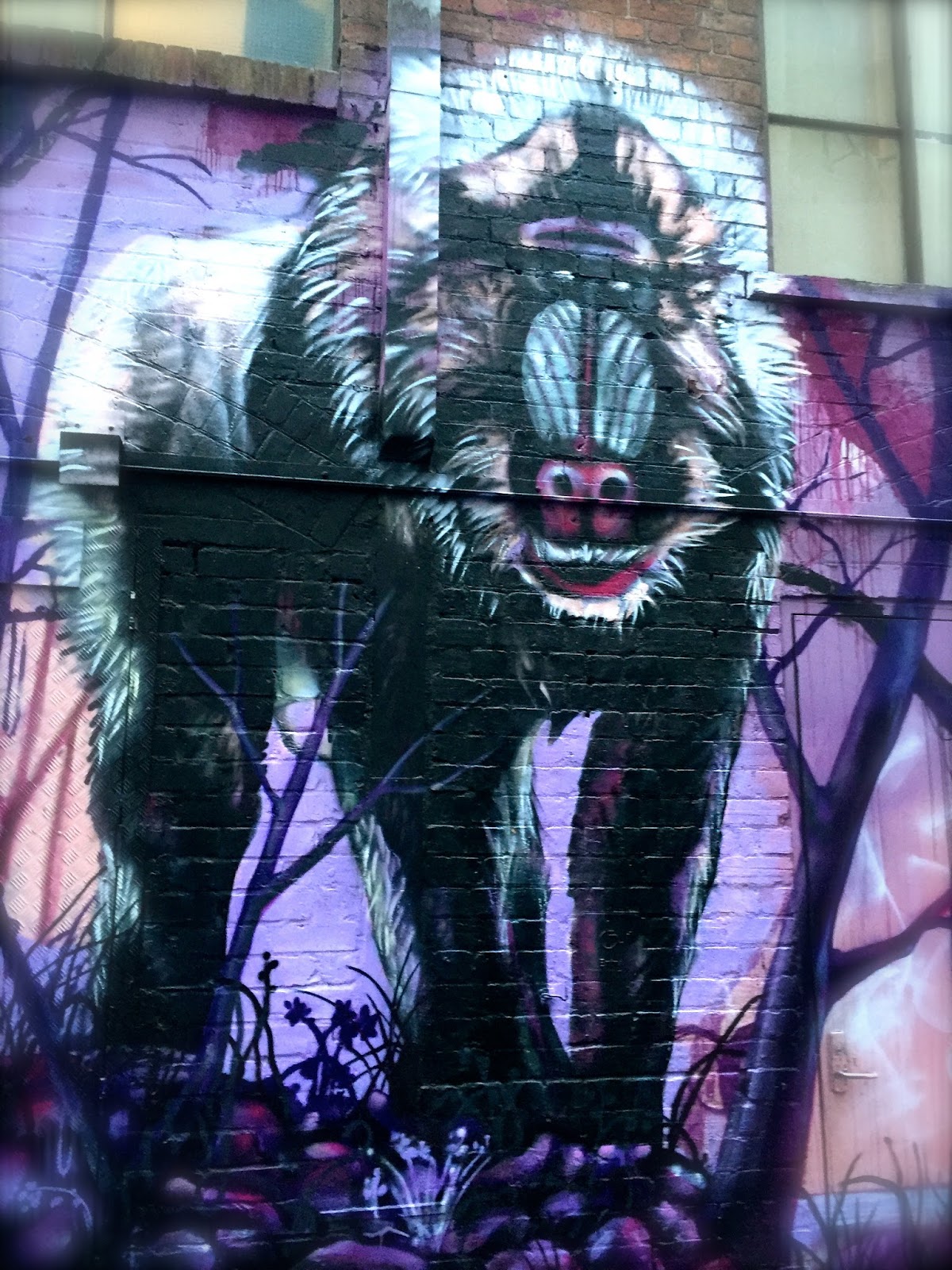
The lane pays homage to Prince with an enormous mural tribute of lilac backdrop, alongside Augus Young and his white-magenta devil horns. A fearsome gorilla with a massive mulberry nose gazed intently ahead, while a predator-disguised flower in bright violet gluttonously swallows a pink-eyed beetle. Music instruments of distorted shapes, washed over by a sea of lavender, congregated at the entry point of the lane. A grotesque-looking foetus and a mother cow in human form sent a sweep of silent eeriness across the place, adding a touch of mysteriousness to the enigmatic wall of ACDC Lane.


(Photos taken in August 2016) 


Location:

Off Flinders Lane, between Exhibition and Russell Street 


See also my previous post on ACDC Lane: 


Friday, 26 August 2016

Burke and Wills statue- heroes or fools?


The Burke and Wills story, a supposedly heroic tale encapsulates all the perfect ingredients of a potentially successful blockbuster: A noble mission to unfold riddles of inner continent, starving explorers confronting unknown wilderness at the far north of Melbourne, tough endurance of formidable desert, a journey beset with scarcity of foods and treacherous weather. The legend ended with tragic deaths of the protagonists and a posthumously erected Michelangelo-style sculpture. With a little sprinkle of skilled cinematography and euphonic sound mixing, the story might have easily turned into the next Oscar-winning Revenant.

Yet how we wish the over-glorification could be justified without a pang a doubt. For despite the glorious height of the public monument and the overwhelming public sentiment in the 1860s, the Burke and Wills expedition is a testament of foolhardiness and incompetence, an ignominious defeat tainted with too many blunders and human follies.


Led by the inexperienced Burke, the grand expedition was almost doomed to fail from the outset. Just few weeks after setting off from the Marvelous Melbourne, an ill-conceived plan and ineptitude leadership caused successive resignations and departures of expedition members. Series of error of judgment saw the disposal of various stores and supplies, a foolish action proved to be fatal in hindsight. News of a rival continental-crossing plan from home triggered Burke’s insecurity and anxiety, the last straw that eventuated the rash decision of the strong-headed leader to split the team and race more than 1000 km towards Gulf Carpentaria in the fiercest December heat of 50° C. They walked a remarkable 3500 km from Melbourne, almost reached their intended destination, prevented only by the mangrove swamps.


Camels and the only horse were slaughtered and eaten on the return journey. Attacks of Monsoonal rain and dysentery ended the life of Gray and brought the exhausted Burke, Wills and King to the brink of weariness. Upon arriving the Cooper Creek depot, the emaciated Burke team was greeted by a deserted camp and an instruction to dig carved into a tree trunk. Inadequate supplies were unearthed, found alongside a devastated message left by the remaining expedition members, notifying the trio that they had arrived too late for the rendezvous. 9 hours too late, to be exact. Arrogant to the end, Burke refused to accept help of the Yandruwandha people, and even, antagonized the indigenous by ridiculously fired his pistol at one of them. Both Burke and Wills died about 10 weeks later. King survived, having accepted the hospitality of the Aborigines.


The Burke and Wills statue was commissioned and built, placed above a base of granite plinth with four bronze relief panels depicting the significant scenes from the expedition positioned at each direction of the pedestal. Designed by the Australian sculptor Charles Summer, the gigantic sculpture suffered almost the same nomadic life as its original characters since it was unveiled in 1865. Like a foreign sojourner in search for a permanent residence, the statue was moved from one place to another almost endlessly and tiringly.


The intersection of Collins and Russell streets was a short sweet habitation till the arrival of cable trams forced its removal to Spring Street in 1886. Increased traffic around the Parliament and the development of the Underground Rail Loop prompted its eviction in 1973, and saw the enigmatic duo being relocated to the southeast corner of Carlton Gardens. A short 6 years later, the Burke and Wills statue was moved again and settled at the unpopular City Square. A short trip was made to Fitzroy for restoration work, and the huge monument was re-erected prominently at its present location at the corner of Swanston and Collins streets in 1993. With the impending development of Melbourne Metro Rail and plans to take over the City Square, it remains to be seen whether any ill-fate will soon befall the Burke-Wills team again.

Location: 

Corner of Swanston and Collins Streets